


Sciences and Knowledge in Sharing: Toward a Common Universalism
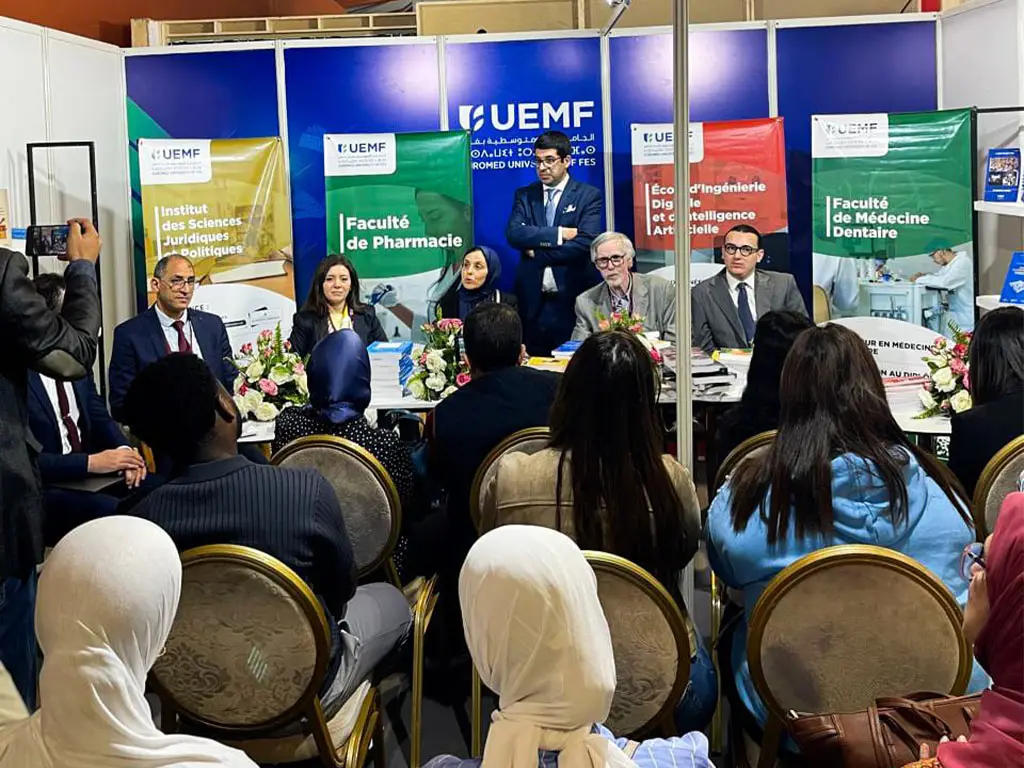
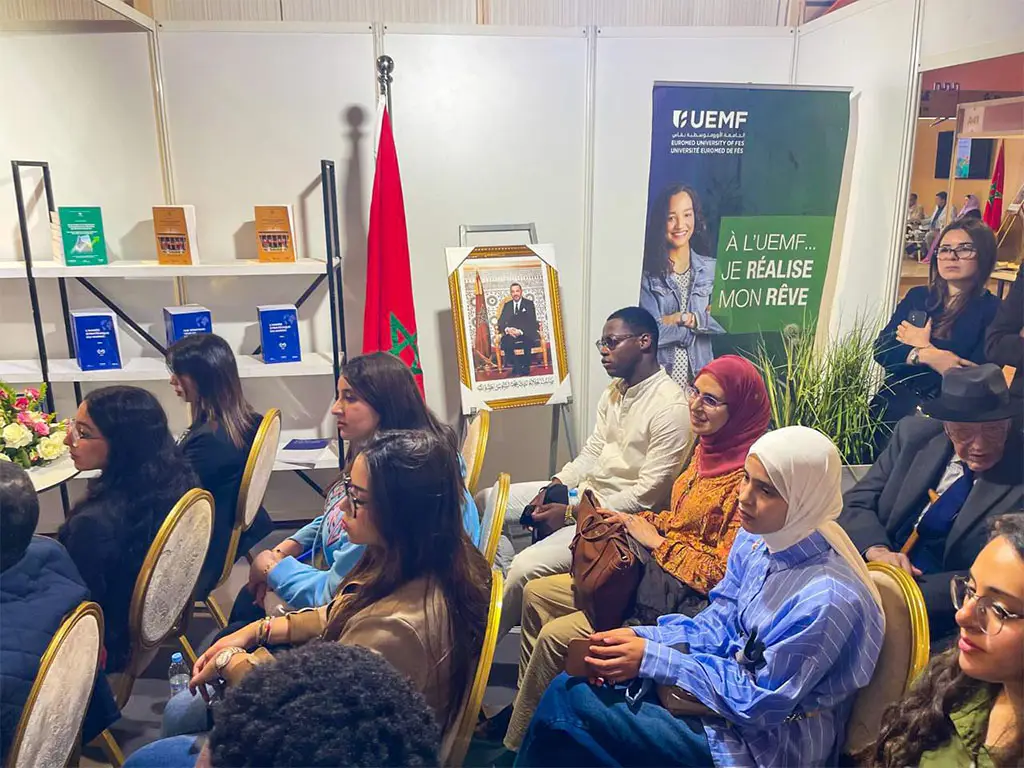
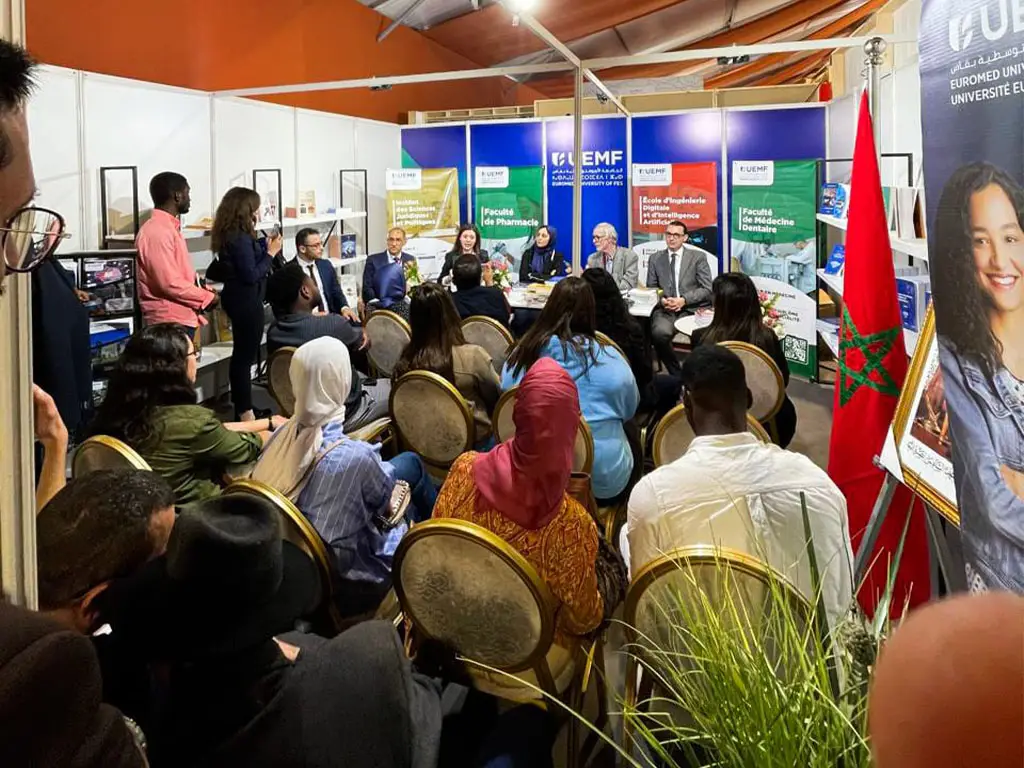
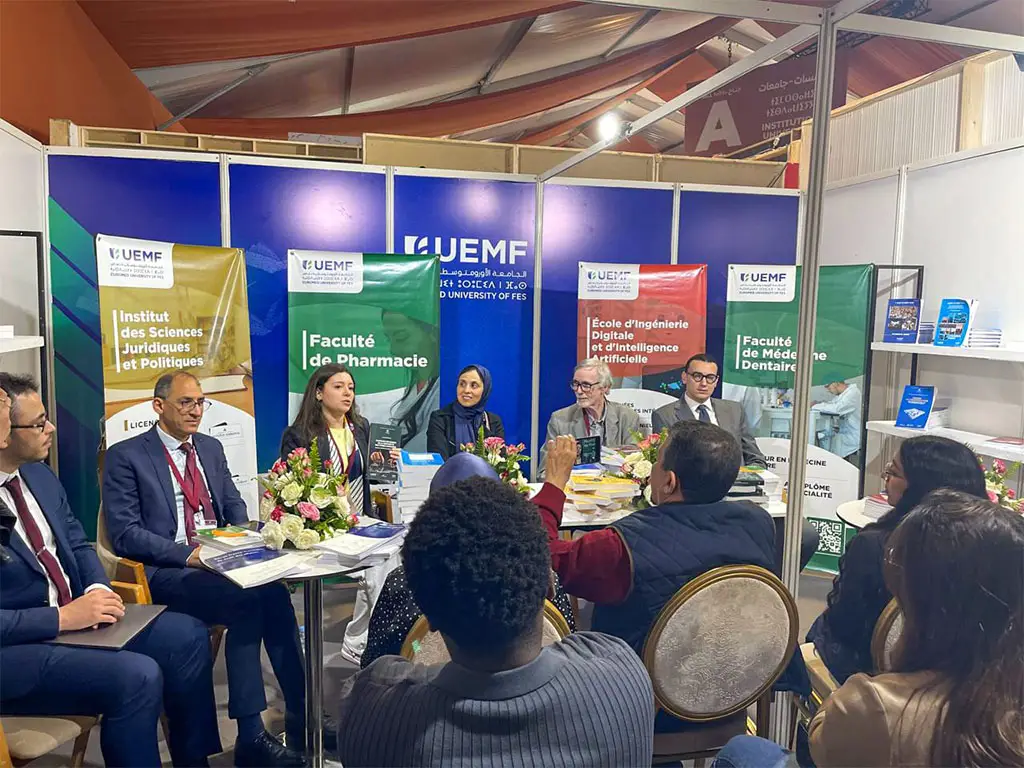
On the occasion of the International Publishing and Book Fair held in Rabat from April 30 to May 10, 2026, the Euro-Mediterranean University of Fez and the United Nations Alliance of Civilizations Chair organized a series of book presentations under the unifying theme: “Sciences and Knowledge in Sharing: Toward a Common Universalism.” This participation reflected a strong commitment to promoting intercultural dialogue, knowledge exchange, and the construction of an open intellectual space grounded in academic and scientific cooperation. The initiative achieved remarkable success, evidenced by the strong public attendance, the richness of the discussions, and the significant interest generated by the various themes addressed.
The first panel, entitled “Knowledge and Societies Tested by History,” highlighted the richness and diversity of contemporary scientific production. From reflections on Morocco’s future and its African anchorage to the challenges of artificial intelligence on the continent, as well as financial mathematics, fluid mechanics, graphic design, and translation as a form of cultural mediation, the works presented demonstrated the value of fruitful interdisciplinarity. This dialogue between the exact sciences, the humanities, and artistic practices illustrated how knowledge contributes to illuminating historical and societal transformations.
The second panel focused on Business Law, with particular emphasis on trade secrets examined from doctrinal, jurisprudential, and comparative perspectives between France and Morocco. It brought together contributions from researchers and specialists addressing issues related to the protection of strategic information, competition, and legal security. The discussions formed part of a scholarly approach aimed at enriching reflection on the evolution of business law within the Franco-Moroccan legal sphere.
The third and fourth panels, respectively devoted to the transition beyond the era of deregulation and to perspectives “Beyond the Crisis,” addressed major themes such as governance, migration, corporate performance, digital transformation, public policy evaluation, sustainable development, and the role of media in times of crisis. These exchanges provided an opportunity to analyze the ongoing economic, social, and political reconfigurations while proposing rigorous and innovative avenues of reflection to strengthen the resilience of contemporary societies.
Finally, the fifth panel, entitled “Student Perspectives,” centered around the student journal, offered a demanding academic framework in which students learned to formulate research questions, construct arguments, organize critical thought, and situate their reflections within academic, civic, and professional concerns. Its significance also lay in its ability to give voice to young people, whose contributions were particularly praised by both participants and speakers.