





General Synthesis of the Meetings of the Euromed University of Fez on the Alliance of Civilizations, By Pr. Abdelhak Azzouzi
Fez, April 27–28, 2026
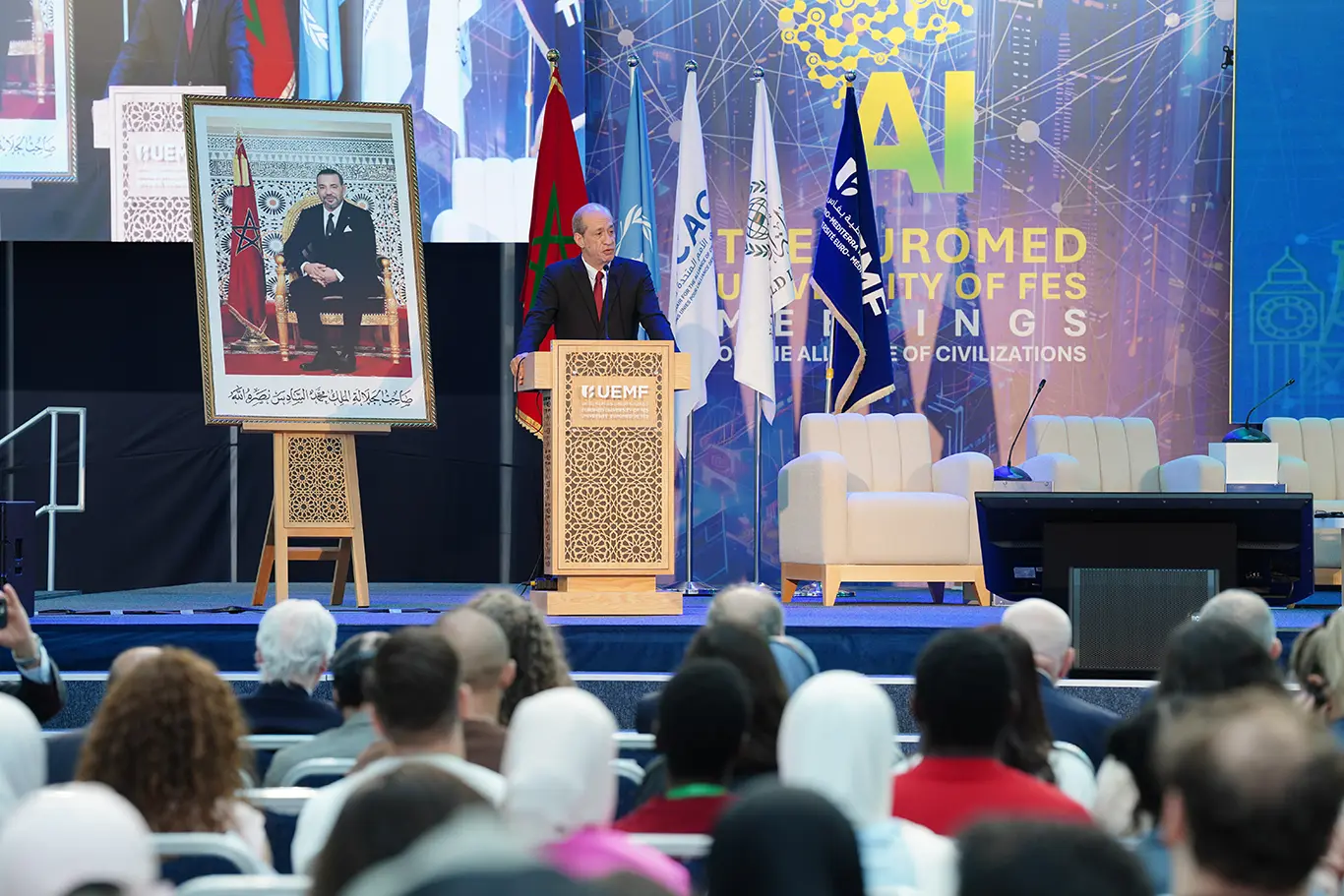
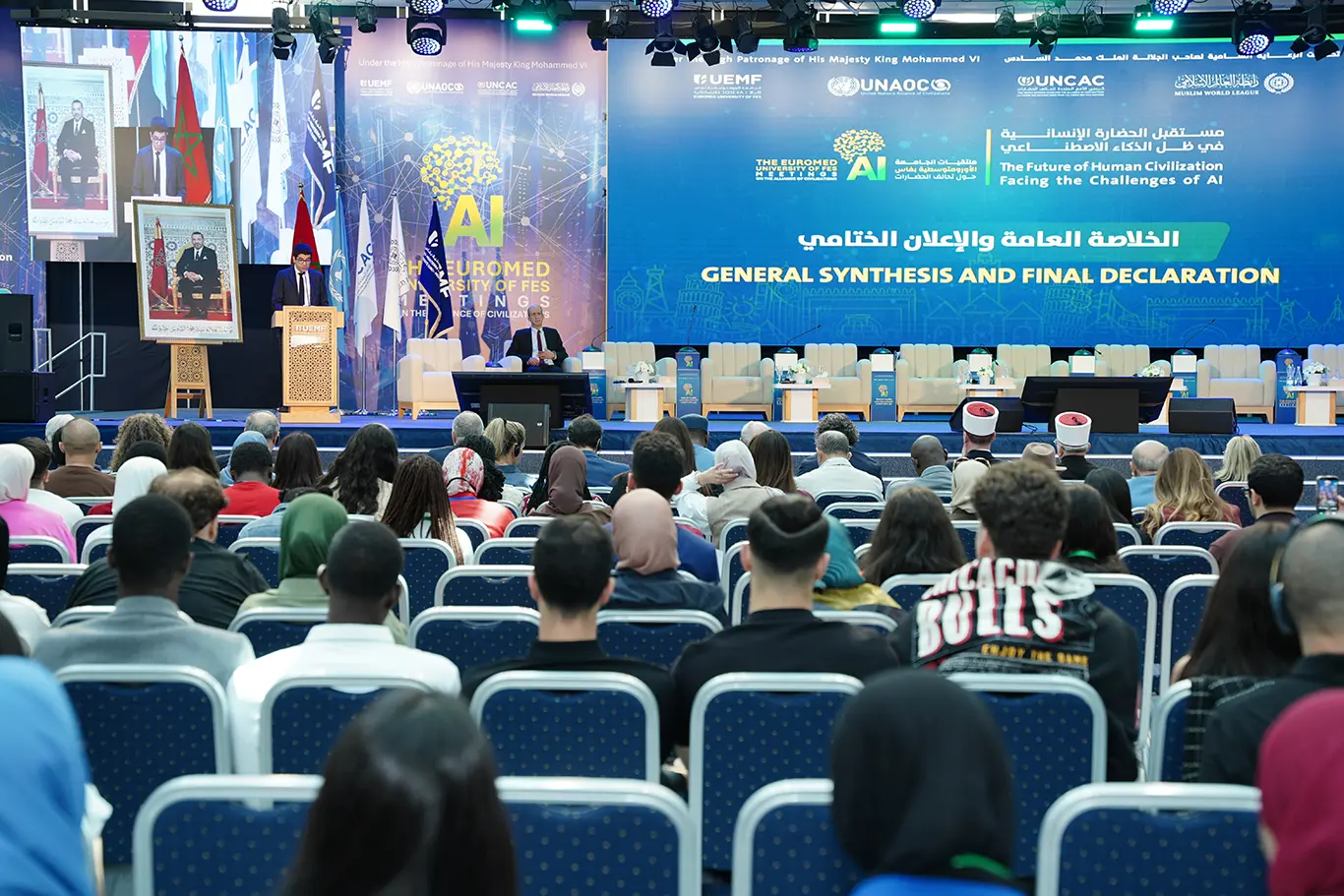
Held under the High Patronage of His Majesty King Mohammed VI, the Meetings of the EUROMED University of Fez on the Alliance of Civilizations, organized on April 27 and 28, 2026, in Fez by the Euromed University of Fez, the United Nations Chair for the Alliance of Civilizations, the Muslim World League, and the United Nations Alliance of Civilizations, constituted a major international event dedicated to reflecting on the future of human civilization facing the challenges of artificial intelligence.
Bringing together more than 2,000 participants from 75 countries—including government officials, diplomats, senior international civil servants, academics, experts, business leaders, and representatives of civil society—this Forum established itself as a high-level platform for multidisciplinary and intercultural dialogue, at the intersection of technological, ethical, geopolitical, and societal issues.
From the opening session, marked by the participation of leading figures, discussions highlighted the strategic importance of a humanistic approach to artificial intelligence, grounded in the values of dialogue, peace, responsibility, and international cooperation. The role of the Kingdom of Morocco, and particularly the city of Fez, as a historic crossroads of civilizations and a space for intercultural mediation, was widely emphasized.
The Forum’s proceedings were structured around several key themes. Plenary sessions examined the foundations of global governance for artificial intelligence, emphasizing the imperatives of transparency, accountability, trust, and regulation. Discussions also addressed scientific challenges related to system robustness, data quality, and the need to develop explainable and ethical models.
Particular attention was given to sectoral applications of artificial intelligence, especially in the field of healthcare, where technological advances offer considerable prospects in diagnostics, personalized medicine, and the optimization of healthcare systems, while also raising critical issues related to data protection and medical responsibility.
The Forum also highlighted the geopolitical implications of artificial intelligence, viewed as a strategic lever of power capable of reshaping international balances. In this context, participants stressed the need to strengthen multilateral cooperation in order to avoid the risks of technological fragmentation and regulatory divergence.
Special attention was paid to the African dimension of these transformations. Discussions underscored the gradual emergence of a continental dynamic aimed at making artificial intelligence a lever for technological sovereignty, inclusive development, and stability. This dynamic relies in particular on structuring initiatives designed to promote equitable access to technologies, support local innovation, and strengthen human capacities in AI-related professions.
The debates also identified major concerns regarding the impact of artificial intelligence on institutional and security balances. The proliferation of manipulated content, the rise of disinformation campaigns, and the increasing use of digital technologies in conflict dynamics constitute critical challenges likely to undermine trust in institutions and weaken social cohesion.
In response to these challenges, a strong consensus emerged on the need to establish innovative and appropriate mechanisms, including strategic monitoring systems, early warning frameworks, and rapid response tools to address information manipulation, as well as technologies for detecting hate speech and managing digital crises. Strengthening African human capacities in artificial intelligence and developing endogenous technological solutions were also identified as essential priorities.
Sessions dedicated to human values and social cohesion reaffirmed that the development of artificial intelligence cannot be dissociated from universal ethical principles. Discussions emphasized the importance of integrating the humanities and social sciences into technology design to ensure alignment with societal expectations and to prevent any form of dehumanization.
Furthermore, the proceedings highlighted the central role of youth, whose strong participation was one of the key strengths of these Meetings. Young participants were recognized as key actors in building a responsible, inclusive, and innovative digital future.
At the conclusion of the two-day event, a strong consensus emerged around several major orientations:
- The need to anchor the development of artificial intelligence in an ethical, inclusive, and human-centered approach;
- The importance of promoting coordinated global governance based on shared normative frameworks;
- The strategic role of intercultural and inter-civilizational dialogue in regulating technological transformations;
- The urgency of strengthening trust in artificial intelligence systems through transparency, accountability, and certification;
- The need to reduce digital divides and ensure equitable access to technologies, particularly in Africa;
- The development of sovereign, responsible artificial intelligence aligned with the needs of populations;
- The integration of educational, cultural, and social dimensions into public policies related to artificial intelligence.
These Meetings thus laid the groundwork for in-depth collective reflection on the interactions between artificial intelligence and human civilization, while affirming the role of the city of Fez, the Euromed University, the Muslim World League, and UNAOC as international platforms for dialogue, knowledge, and innovation.
Ultimately, the Fez Forum contributed to the emergence of a shared conviction: technological progress can only find meaning and legitimacy if it serves humanity, its dignity, and its common future, while paving the way for the emergence of a more equitable, regulated, and locally grounded artificial intelligence.