

Pr Walid BEN HAMIDA on The Question of “The Market of Arbitration” - October 29, 2025
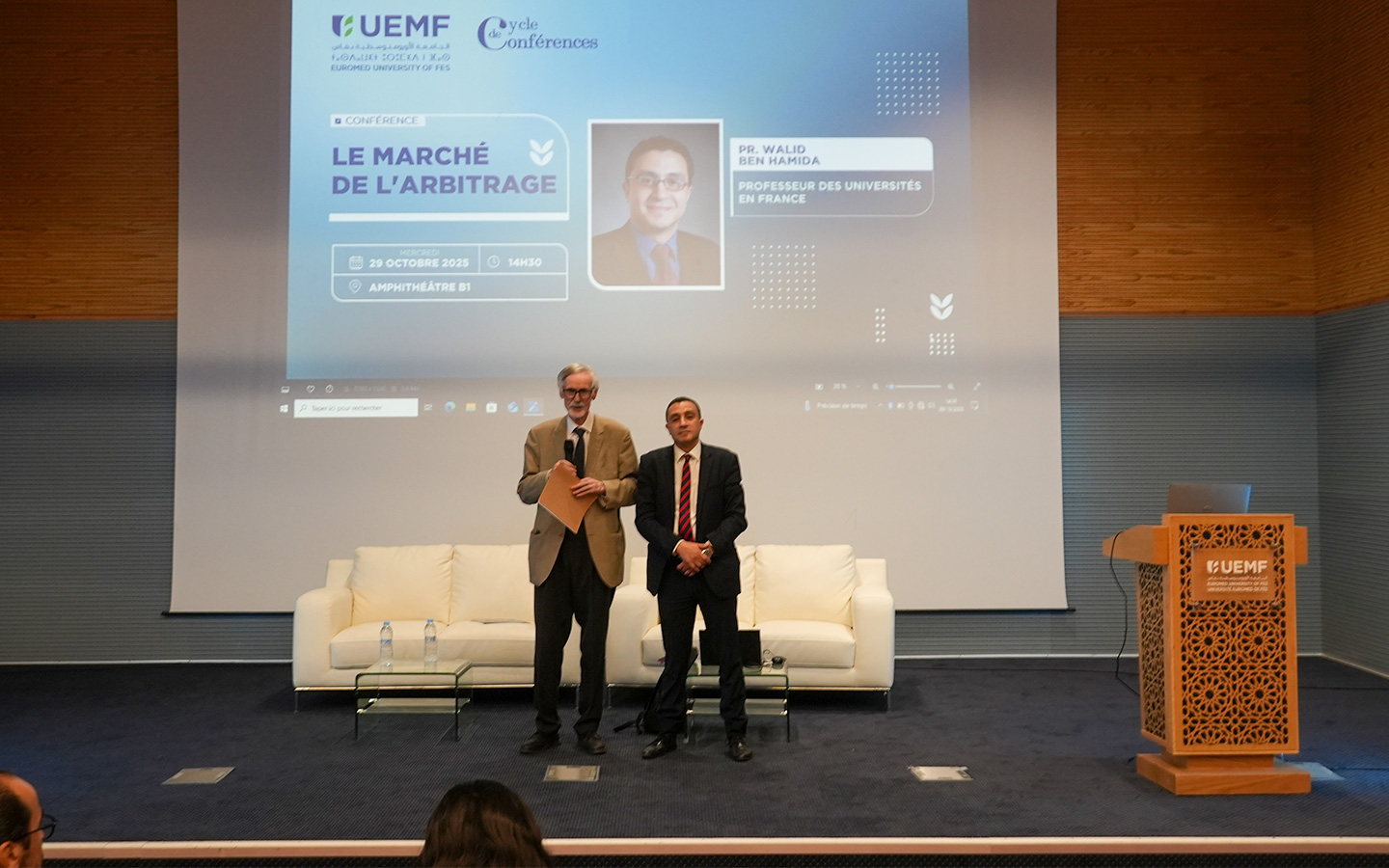

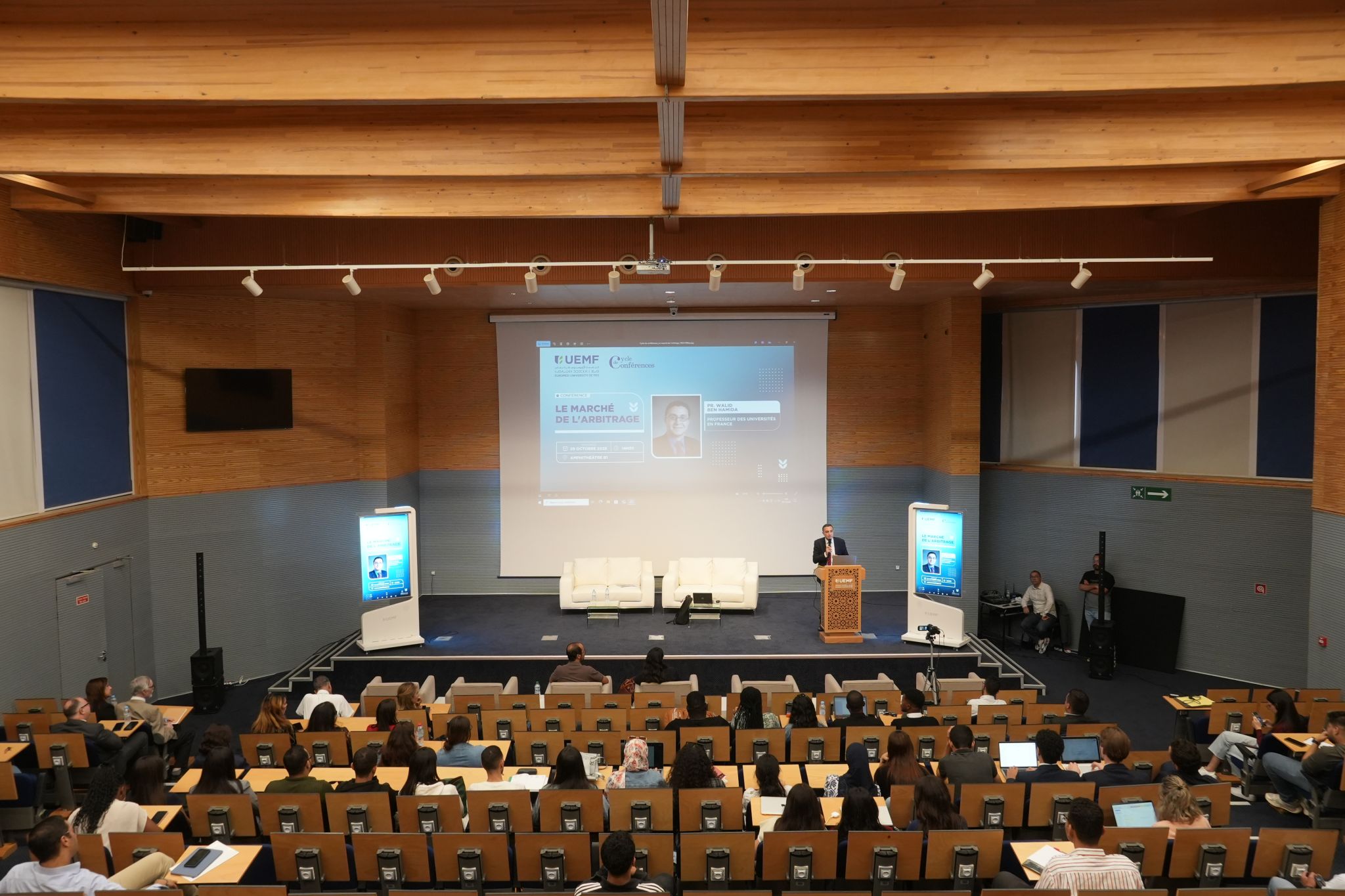
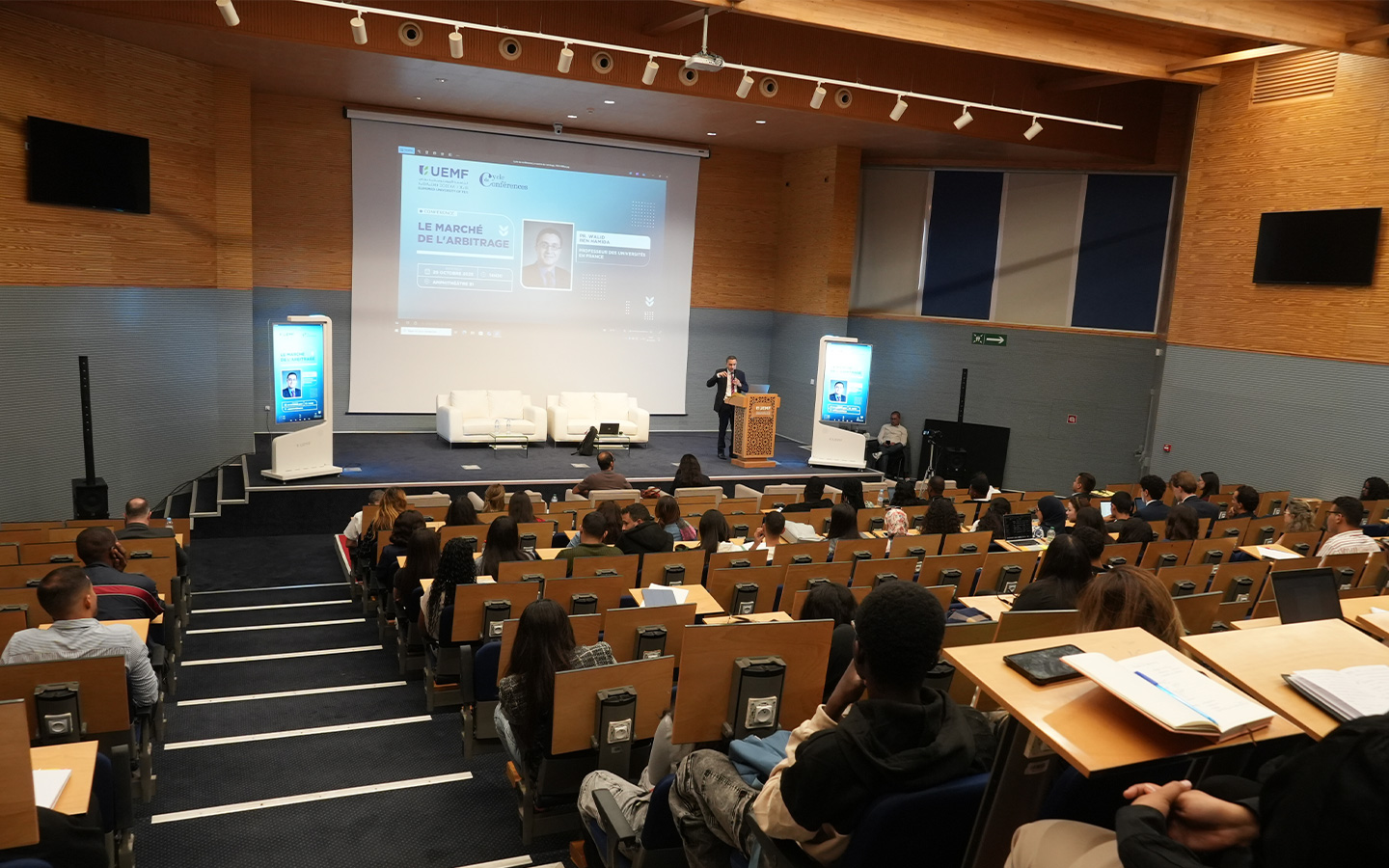
As part of the lecture series launched by the Euromed University of Fes, Dr Walid BEN HAMIDA, Professor of Law at the University of Lille and visiting professor in the Master’s programme Conflict Management and Alliance of Civilizations of the UNCAC Chair, delivered a high-level lecture on the theme “The Market of Arbitration”. This event was an opportunity for a lively debate on the contemporary challenges of international arbitration, professional practice, and its intersection between law and economics.
Drawing on his exceptional experience, the speaker illustrated his remarks with concrete case studies. In fact, the speaker is an author of a doctoral thesis on arbitration defended at the University of Paris II, he has taught law in a hundred countries and has published more than 150 articles and books in French, Arabic and English. Involved in around fifty investment and commercial arbitration cases, he has served successively as counsel, lawyer, and expert and also as president of an arbitral tribunal, sole arbitrator and co-arbitrator.
The main idea put forward in his speech presents arbitration as a “structured market” in which various stakeholders – arbitral institutions, arbitrators, law firms, experts, States and companies – contribute to developing an alternative mode of dispute resolution, particularly in the context of international contracts.
Between international trade and the difficulties of resolving disputes at the local level, Dr Walid BEN HAMIDA explained that arbitration offers a more flexible option, relatively faster and better adapted to the needs of economic actors. However, certain limits in terms of cost and accessibility for small and medium-sized enterprises were highlighted and discussed.
At the end of the lecture, a rich discussion was engaged with UEMF students around the market’s opportunities in terms of job openings and access modalities, for future lawyers and business professionals, to careers in arbitration, especially in a context where African human capital remains under-represented in this continuously growing market.